
PANEL ASSESSMENT
Our team search high and low to find the information we need.
View service →
Independent Specialists in Composite Panel Assessment
Panel Check provides independent technical assessments of composite insulated panel systems, helping building owners, insurers and property developers understand, manage and mitigate risk while optimising the performance and value of their assets.
What We Do
Panel Check provides a complete suite of specialist services covering every stage of the composite panel lifecycle - from identification & testing through to remediation and risk management.
Our Services
A comprehensive suite of inspection, testing and advisory services for composite panel and cladding systems — giving building owners, property developers and insurers the evidence they need to act with confidence.
Identification, condition surveys and deterioration analysis of internal and external cladding systems, with replacement recommendations
Working with a range of partners to complete: Indicative Reaction to Fire Classification (EN 13501), Resin PIR/ PUR determination, CFCs/ Controlled Substances
Safe access surveys for suspended ceilings, complemented by drone inspections and roof assessments
Surveys to assess and verify fire compartment integrity
Input into risk reviews for insurers and property portfolios, with targeted guidance to support insurer awareness of panel-related risks
Panel installation checks and remediation snagging for panel systems
Thermal, condensation, and moisture risk assessments including thermal bridging analysis
Accurate panel detailing mapped onto site plans
Our Experience
Real situations. Real findings. What Panel Check encounters on site — and what it means for your building, your cover and your risk.
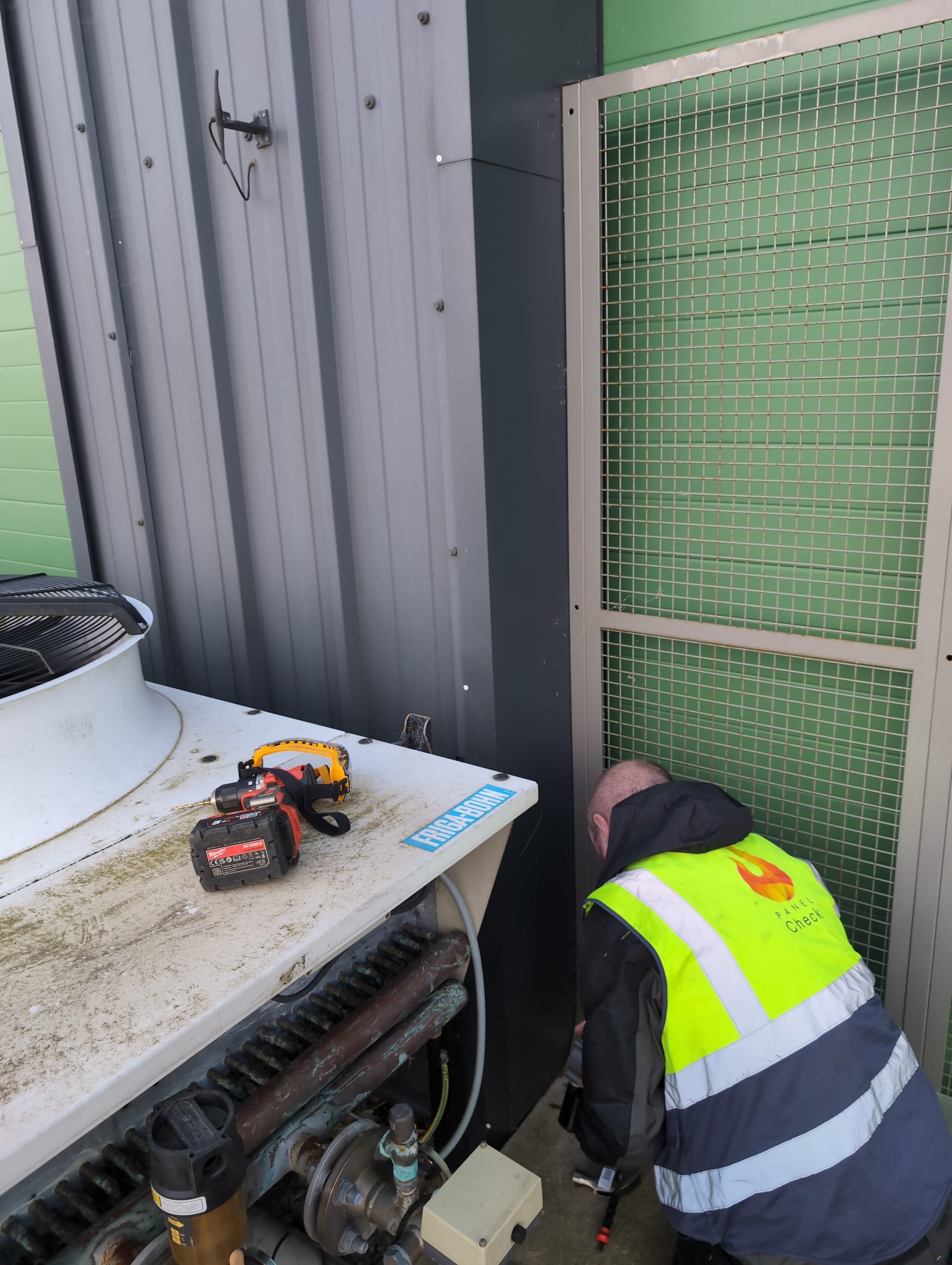
Our team search high and low to find the information we need.
View service →
Core samples extracted and packaged for testing.
View service →
Roof spaces are regularly accessed but rarely checked.
View service →
Buildings evolve and services grow unchecked through fire compartments.
View service →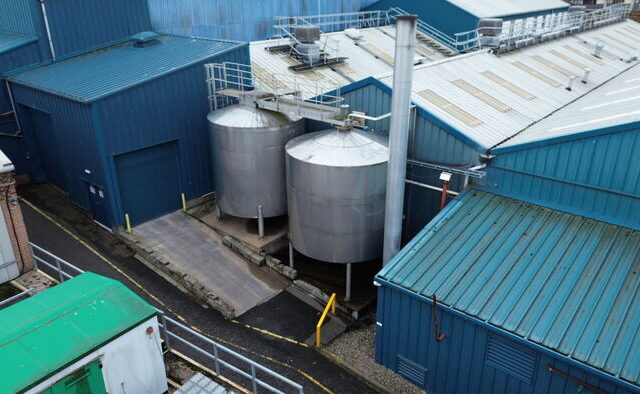
Business Interruption costs mean some panelled operations need significant hands-on assessment.
View service →
Building performance and LPCB compliance are not achieved if corners are cut.
View service →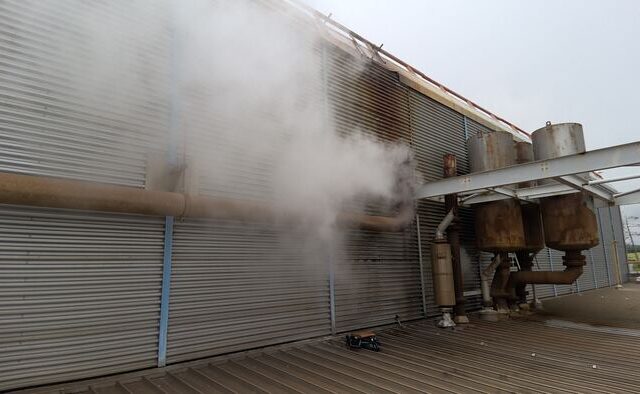
Your building consumes huge amounts of energy. Degraded panels create a financial burden.
View service →
In complex buildings knowing what panels you have, and where, is critical.
View service →Sectors We Serve
Panel Check is active across the sectors where composite panel risk is greatest — and where the consequences of an uninformed decision are most severe.
Knowledge Base
Technical guides, fire risk analysis and sector-specific insights from the Panel Check team - helping building owners, insurers and facilities managers understand composite panel risk.
Discover how non-destructive core sampling distinguishes high-risk EPS from flame-retardant PIR and non-combustible mineral wool to reduce commercial property insurance premiums.
Learn how LPS 1181 and FM Approvals impact composite panel fire performance, satisfy insurer risk audits, and help lower property insurance premiums.
Food production and cold storage facilities face the highest scrutiny from composite panel underwriters. A verified assessment can transform coverage conditions - and in many cases materially reduce premiums.
Why identification is harder than it looks The composite panel market in the UK has been active for over fifty years. During that time, dozens of manufacturers have produced hundreds of panel variants – many of which look identical from the outside despite having fundamentally different core materials. Manufacturers have changed formulations, been acquired, merged […]
Composite panel risk is concentrated in a handful of sectors. Panel Check's sector-specific expertise covers the full range - from cold storage and food production to pharmaceutical, logistics, automotive and data centres.
Automotive facilities combine combustible panel cores with paint storage, solvent handling and regular hot works - a risk combination that requires specific assessment. Poor documentation and frequent ad hoc modifications make independent verification essential.
Pharmaceutical manufacturing facilities have regulatory obligations around building fabric integrity that extend beyond standard fire safety. A Panel Check assessment provides the documented evidence of composite panel condition that GMP compliance requires.
Cold storage facilities carry a disproportionate concentration of composite panel fire risk. Thick foam cores, large floor areas and high business interruption values have driven significant tightening of insurer conditions across the sector.
Not knowing what composite panels are in your building is no longer defensible. The consequences extend to policy voidance, uninsured losses and - for directors - personal liability for misrepresentation to insurers.
A concise reference guide to the main composite panel types found in UK buildings - core materials, fire classifications, insurance implications and typical installation periods at a glance.
Factory composite panels have been produced continuously in the UK since the early 1970s. Understanding how the product range evolved - and what that means for the panels in existing buildings - is essential context for any risk assessment.
Visual identification of composite panels draws on profiling, fixing patterns, joint details and manufacturer markings. Each indicator narrows the field - but rarely provides certainty on its own. This guide explains what to look for and when laboratory testing is the only reliable answer.
Composite insulated panels are used across thousands of UK industrial buildings. Of all the variables in their construction, the core material is the one that matters most - it determines fire behaviour, insurance conditions and the cost of compliance.
Industrial cladding and roofing assessments are not all equal. Built-up systems, composite panels and overcladding each present different risks and require different assessment methods to produce a result that stands up to insurer scrutiny.
Standard fire risk assessment guidance was not written with composite panel buildings in mind. The specific risks - rapid fire spread through combustible cores, compromised compartmentation, and suppression system limitations - require a targeted approach.
An LPS approval is not a guarantee of fire-safe performance in your building. Understanding the difference between a panel's test classification and its real-world behaviour as installed is essential for anyone managing composite panel risk.
Composite insulated panels are one of the most misunderstood materials in the UK industrial building stock. The core material determines fire behaviour, insurance conditions and regulatory compliance - yet most buildings have no reliable record of what their panels contain.
Get In Touch
A Panel Check assessment gives you - and your underwriter - the verified evidence needed to make confident decisions. Get in touch with our team today.
Contact the Panel Check Team